
Have you ever stood in a spot and wondered, “What happened here centuries ago?” I have. I remember the first time I visited a famous fort in Delhi. Everyone was busy taking pictures. But I just stood in a quiet corner. I placed my hand on the sun-warmed stone. I closed my eyes. For a second, I could almost hear the whispers. The clink of armor. The rustle of silk. The distant beat of a drum. It was just my imagination, of course. But the feeling was real. It was powerful.
That is the magic of a heritage walk. It is not just a tour. It is a conversation with time. It is peeling back the layers of a city to find its beating heart. India’s historic cities are perfect for this. They are like living, breathing storybooks. And the best way to read them is on foot.
So, tie your shoelaces. Grab a bottle of water. Let’s explore what makes these walks so special.
What Exactly is a Heritage Walk?
Think of it like this. A history class can tell you a date. A textbook can show you a picture. But a heritage walk lets you live the story. You are not a spectator. You are a participant.
You walk the same narrow lanes where merchants once haggled. You touch the same walls that soldiers defended. You feel the same sun that baked the courtyards of kings. It is history you can feel with your fingertips.
These walks are usually led by guides. But not just any guides. These are often local experts. They are passionate storytellers. They do not just recite facts. They share legends. They point out tiny, hidden carvings you would miss on your own. They know the best street food stalls around the corner. They bring the stones to life.
Why You Should Absolutely Try One
You might think, “I can just visit these places myself.” You can. But it is not the same. It is like the difference between reading a recipe and tasting the food. A heritage walk gives you the flavor.
You see the hidden details. I was on a walk in Jaipur. Our guide, an old man with twinkling eyes, stopped us in front of a grand building. “Look up,” he said. We all craned our necks. Under the eaves were the most beautiful, and surprisingly, modern paintings. There were steam trains and hot air balloons. The king had them painted to show he was in touch with the world. I would have never, ever noticed that on my own.
You connect the dots. A city is a puzzle. The fort connects to the market. The market connects to the temple. The temple connects to the water tank. A good guide shows you how these pieces fit together. They explain why the city was built here. Why the streets are laid out like that. Suddenly, the city makes sense. It is not a random collection of old buildings. It is a master plan.
You become a time traveler. Walking through the ruins of Hampi is a surreal experience. Giant boulders are scattered everywhere. It looks like a landscape from a dream. Then your guide tells you a story. He describes the city 500 years ago. The bustling markets. The glittering palaces. The sounds of music and celebration.
And then… you see it. Not with your eyes, but with your mind. The empty fields fill with people. The silent stones begin to speak. The pressure of that lost glory is almost physical. Your heart does drop. It is a powerful, humbling feeling.
A Glimpse into India’s Walkable Histories
Every Indian city has a different story to tell. Here are a few of my favorites.
1. Delhi: The City of Seven Cities (and more!)
Delhi is not one city. It is many cities built on top of each other. A heritage walk here is like flipping through the pages of a history book. Each chapter is a different empire.
You can start in Mehrauli. This is the oldest part of Delhi. Here, you will find the Qutub Minar, towering over everything. But the real treasures are in the quiet lanes around it. You will find Jamali-Kamali, a mosque and tomb tucked away in a garden. The atmosphere is so peaceful. It feels forgotten by time. The silence there is not empty. It is full of stories.
Then there is Shahjahanabad. That is the old name for Old Delhi. This is an assault on the senses. In the best way possible. The moment you enter the old gate, the energy changes.
The air is thick with smells. Spices. Oil. Flowers. Sweat. The sounds are a symphony of chaos. Honking rickshaws. Shouting vendors. The call to prayer from the Jama Masjid. You walk through Chandni Chowk, a street so alive it feels like a living creature. You can peek into tiny shops that have been there for a hundred years. You can taste food that recipes have been perfected over generations. This is not a dead monument. This is a living, breathing community.
2. Ahmedabad: A Pol Life
Ahmedabad’s old city is a maze. A beautiful, confusing, and wonderful maze. The heart of this maze is the pol. A pol is a gated community. It was built for people from the same trade or caste to live together.
Walking through these pols is like stepping into a secret world. The streets are so narrow you can touch both sides. The houses have beautiful, carved wooden facades. They lean towards each other, almost whispering secrets.
Every few steps, you will find a chabutaro, a bird feeder. This shows the community’s deep respect for all life. The guides here often live in the pols themselves. They will invite you into their courtyards. They will tell you stories of their grandparents. You are not just learning history. You are being welcomed into a home.
3. Kolkata: The Colonial Grandeur
Kolkata’s heritage walks tell a different story. This is the story of the British Raj. Of grand buildings and a rich cultural past.
A walk through the College Street area is a trip for the mind. It is called “Boi Para” or the Book Market. The smell of old paper is everywhere. You walk past the Indian Coffee House. This is where famous thinkers and artists would argue and create. You can almost feel their presence.
Then there is the Kumartuli area. This is where the magic happens. Here, artisans create magnificent clay idols of gods and goddesses. You can watch a lump of clay and straw slowly turn into the face of Goddess Durga. It is a breathtaking display of skill and devotion. You see art being born right in front of you.
4. Mumbai: The Victorian Trail
Mumbai is a fast-paced, modern city. But its past is still visible. A heritage walk in the Fort area reveals this beautifully.
You will see buildings that look like they are from London. The Chhatrapati Shivaji Terminus is not just a railway station. It is a palace of Victorian-Gothic architecture. The University building and the High Court stand as proud reminders of a different era. Walking here feels like being in two time periods at once. A modern taxi zooms past a 150-year-old statue. The past and present exist side-by-side.
5. The Temple Towns: Hampi and Madurai
Some heritage walks feel like a pilgrimage.
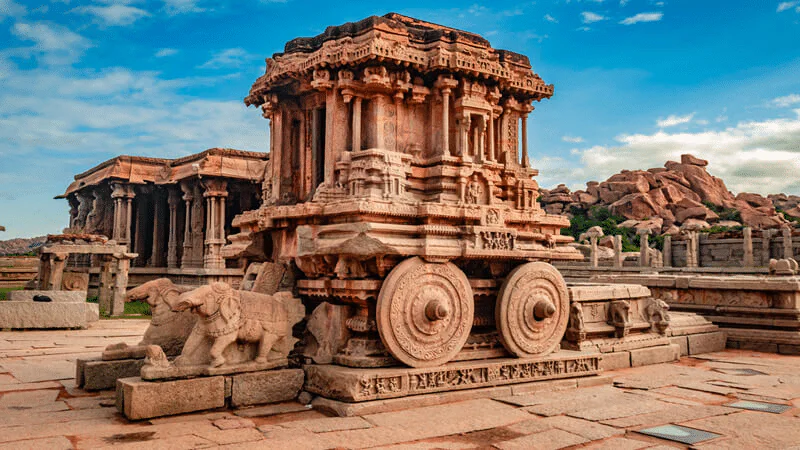
Hampi, in Karnataka, is an open-air museum. The scale is enormous. You need a good guide to make sense of it all. They will take you to the Vitthala Temple with its musical pillars. They will show you the Queen’s Bath. They will lead you to the spot where the king held festivals. The landscape is strange and beautiful. The history is epic. You leave feeling very small, but also connected to something vast.
Madurai in Tamil Nadu is a city that never sleeps. It has buzzed with energy for over 2500 years. The center of it all is the Meenakshi Amman Temple. It is a city within a city. A heritage walk here is a spiritual and sensory journey. You get lost in a forest of colorful pillars. You see gods and goddesses depicted in stunning detail. The air is filled with the smell of incense and the sound of chanting. It is an unforgettable, intense experience.
How to Make the Most of Your Walk
A little preparation goes a long way. Here is how you can have a great experience.
- Wear Your Most Comfortable Shoes. This is the most important rule. You will be walking for two to three hours, maybe more. Your feet will thank you.
- Carry Water and a Snack. Walking is thirsty work. A small snack, like a granola bar, can save you if you get hungry.
- Be a Sponge, Not a Judge. You will see things that are different. The chaos of Old Delhi. The quiet of a pol. Do not compare or judge. Just absorb it. Let the city be what it is.
- Ask Questions. The guide is your key. Ask them anything. “What was this building used for?” “Why is this street curved?” “What is that smell?” There are no silly questions.
- Look Beyond the Big Monument. The real charm is often in the small things. A carving on a doorframe. A friendly shopkeeper’s smile. The pattern of shadows on an old wall. Pay attention to the details.
- Put Your Phone Away. Take a few pictures, of course. But then, put the phone in your pocket. Just look. Listen. Smell. Feel. Be present in that moment. The Instagram post can wait. The memory is what matters.
Conclusion
A heritage walk is more than a sightseeing trip. It is an invitation. An invitation to step into a story that has been going on for centuries. You get to be a small part of it, even for just a few hours.
You return home with more than just pictures. You return with the feel of ancient stone. The taste of a new spice. The sound of a forgotten legend. You return with a piece of that city living inside you.
The history of India is not locked away in a museum. It is right there. On the streets. In the air. Waiting for you to listen.
So, what are you waiting for? A city’s past is calling your name. All you have to do is show up. And start walking.